Thermal Imaging Inspections in Auckland
Identify electrical hotspots and mechanical issues before they lead to fire, equipment failure or costly downtime
Identify Issues Before They Become Failures
Auckland Thermography provides electrical and mechanical thermal imaging inspections, along with AS/NZS 3019 periodic assessments for commercial buildings and industrial sites across Auckland and New Zealand.
Each inspection includes a clear report with images, priority ratings and practical recommendations. It gives you the information you need to plan maintenance, respond to insurer requests and address the most important issues first.
You’ll deal directly with me from the initial enquiry through to the inspection and report, giving you consistent communication and full context on any findings.
I’m an ITC Certified Thermographer and EWRB Registered Electrician with 20 years’ electrical industry experience. I’ve inspected approximately 70,000 switchboards and control panels over my career, and Auckland Thermography is SiteWise Gold accredited.
Services
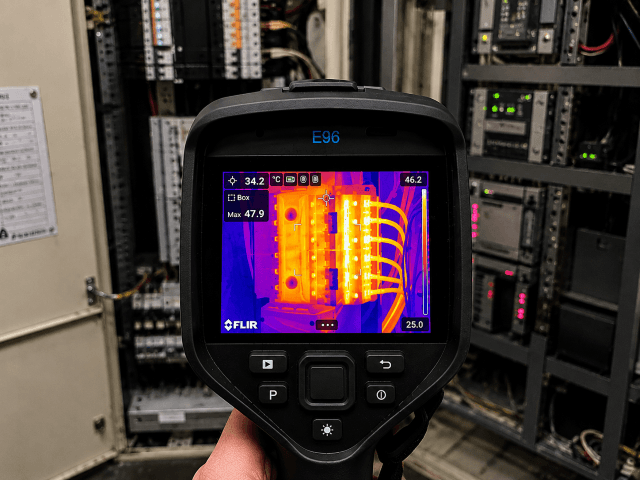
Electrical Thermal Imaging
Switchboard thermal imaging can identify overheating caused by overloaded circuits, failing components or poor connections. Finding these issues early can help prevent outages, fire and equipment damage
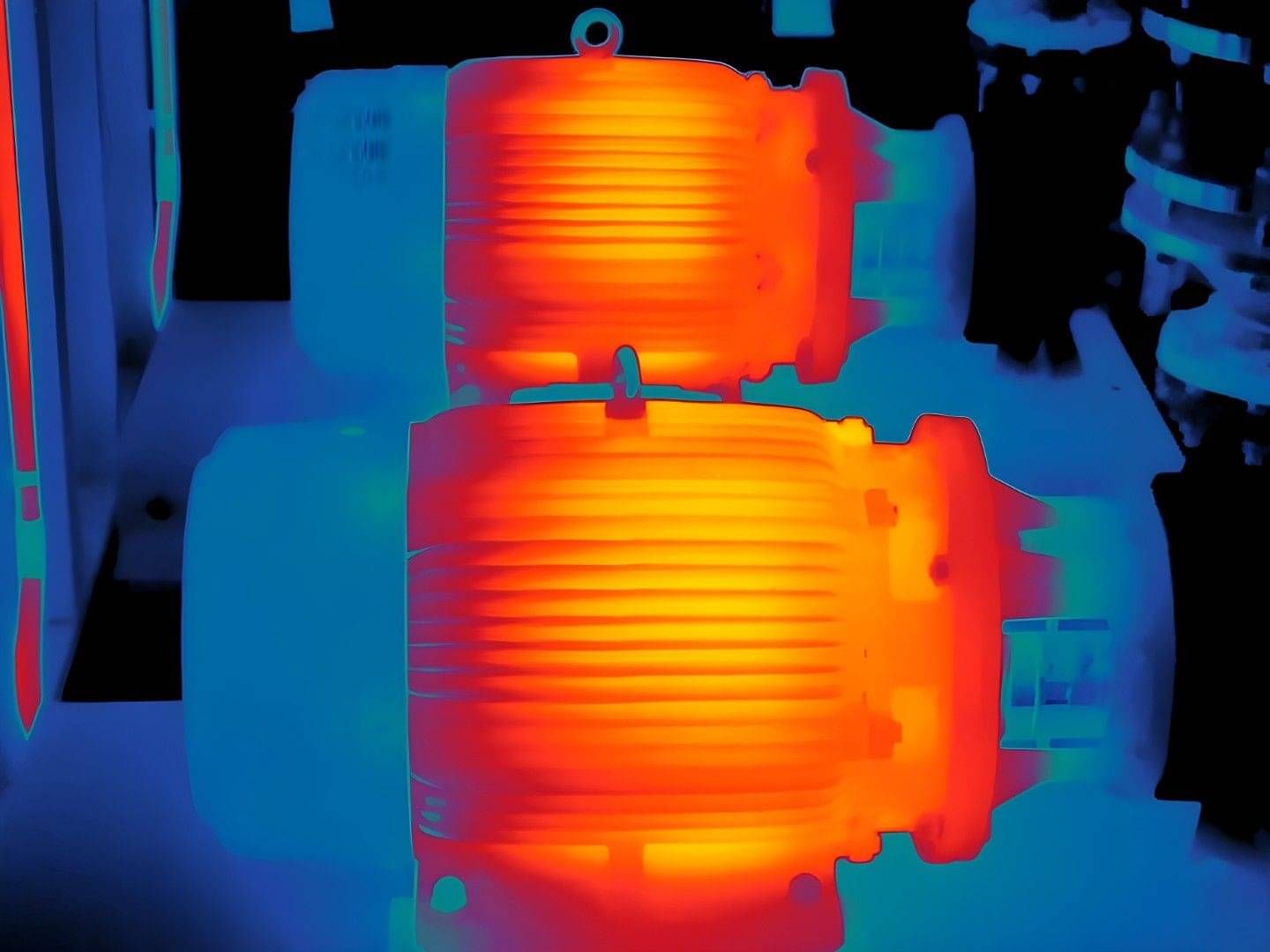
Mechanical Thermal Imaging
Mechanical thermal imaging checks motors, bearings and other equipment for heat linked to friction, poor lubrication or misalignment. The results help maintenance teams plan repairs and reduce downtime
AS/NZS 3019 Assessments
An AS/NZS 3019 periodic assessment checks the condition and safety of an existing electrical installation. It can help you plan corrective work and respond to an insurer’s request for documented electrical checks
What is Thermal Imaging?
Thermal imaging, also known as infrared thermography, uses an infrared camera to show surface temperature differences. Unusual heat patterns can indicate issues such as overheating electrical connections, overloaded components, worn bearings or restricted cooling.
Inspections are completed while equipment is operating, allowing multiple electrical and mechanical assets to be assessed quickly with minimal disruption.
Benefits of Infrared Thermography
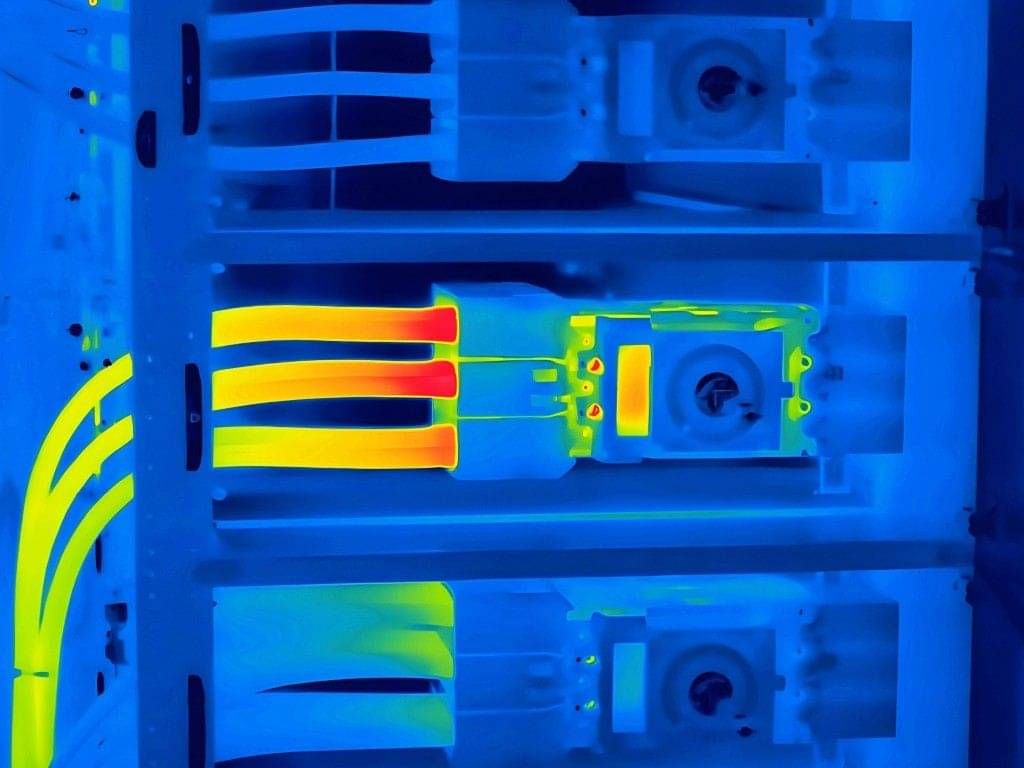
Detect Problems Early
Spot unusual heat in switchboards, motors and other equipment that may indicate developing faults not obvious during routine visual checks
Reduce Operational Risk
Support safer, more reliable operation of critical equipment by identifying overheating that could lead to damage or an unexpected shutdown
Plan Maintenance Efficiently
Use thermal and visual images, priority ratings and practical recommendations to decide what needs attention first and schedule repairs
How It Works
① Scope & schedule
Tell me your site location, inspection purpose, and preferred timeframe. I’ll confirm scope, pricing and availability.
② Inspect & capture evidence
I'll conduct an inspection of nominated assets, capturing thermal and visual images to identify potential faults and areas requiring attention.
③ Report & prioritise
I’ll issue a report with site and asset details, priority ratings, and recommended actions, so you can see what needs attention and plan the next steps.
Reports Built for Easy Follow-Up
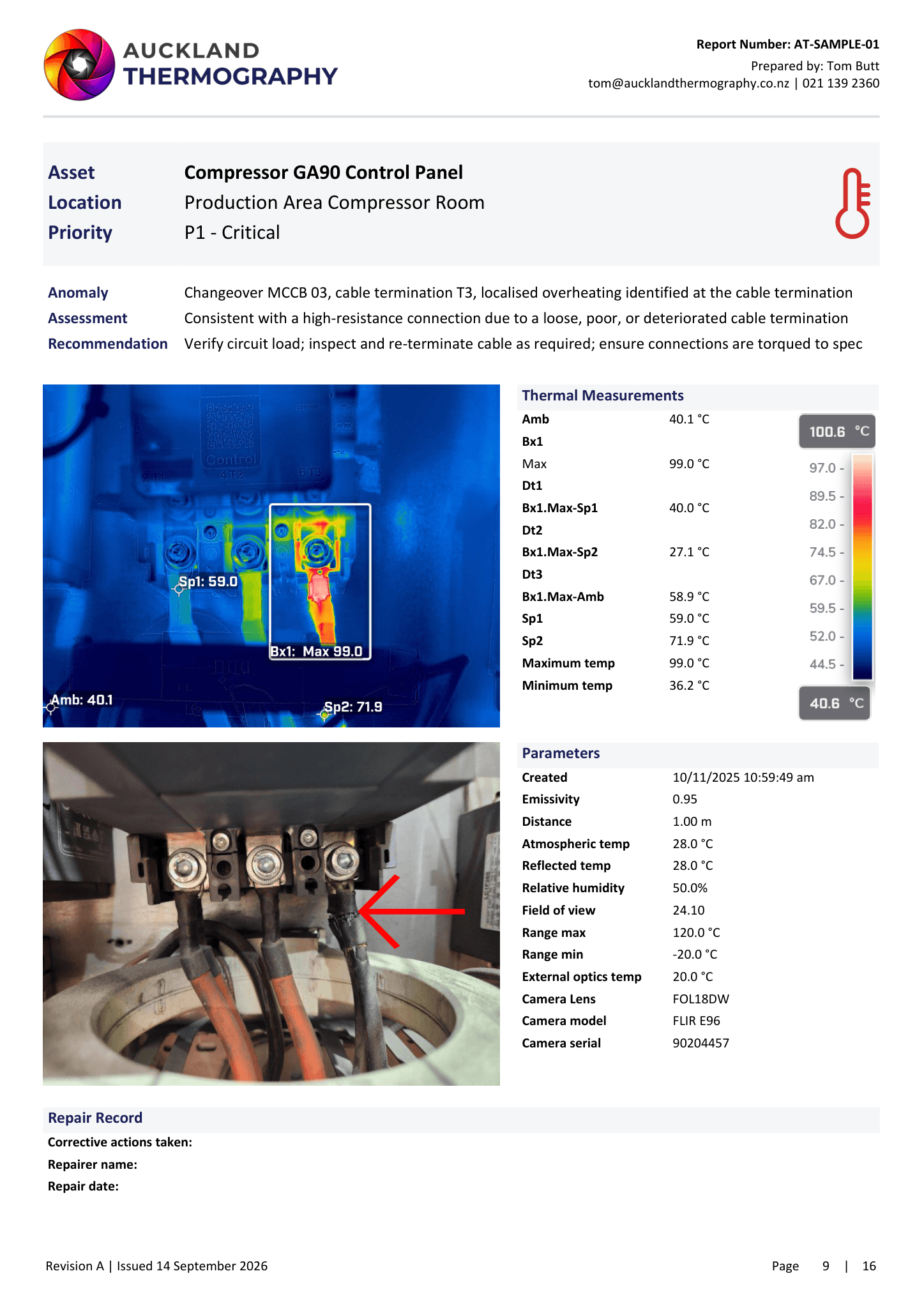
Every electrical and mechanical thermography inspection includes a structured thermographic report showing what was inspected and what the findings mean.
The report includes:
Thermal and visual images for each finding
Colour-coded priority ratings
Clear assessments and recommendations
A list of inspected assets
Space to record completed repairs
Reports are generally supplied within two business days and can be shared directly with your insurer, electrician or maintenance team.
Clients & Industries
Clients
Facilities and maintenance teams
Property managers and landlords
Insurers and risk managers
Building owners
Site and asset managers
Body corporates and associations
Government and council
Commercial Sites
Warehousing and logistics
Office blocks and retail shops
Hospitality & accommodation
Residential & aged care facilities
Public facilities (libraries, pools etc)
Data centres
Hospitals and healthcare facilities
Industrial Sites
Production and manufacturing
Food processing and cold storage
Electricity generation & distribution
Rubbish and recycling sites
Water and wastewater stations
Ports and marine facilities
Oil, gas and fuel terminals
Ready to Book a Thermal Imaging Inspection?
Tell me your site address, inspection purpose, and preferred timeframe. I’ll confirm scope, pricing, and availability.
Auckland Thermography Ltd
021 139 2360
22/18 Hewlett Rd, Massey, Auckland 0614


Hours & locations
Monday - Friday: 6am - 5pm
Auckland based - inspections can be carried out NZ wide and overseas by request